Do you need to sit the civic exam?
Since 2026, the civic exam is a requirement for a first application for a multi-year residence permit (carte de séjour pluriannuelle), a resident card (carte de résident), and naturalisation. However, depending on your application type, age, or personal circumstances, you may not be affected — or may fall under a different category. Answer the questions below to find out in under a minute, with no account required.
Step 1 of 4
What is your application type?
Why the category matters
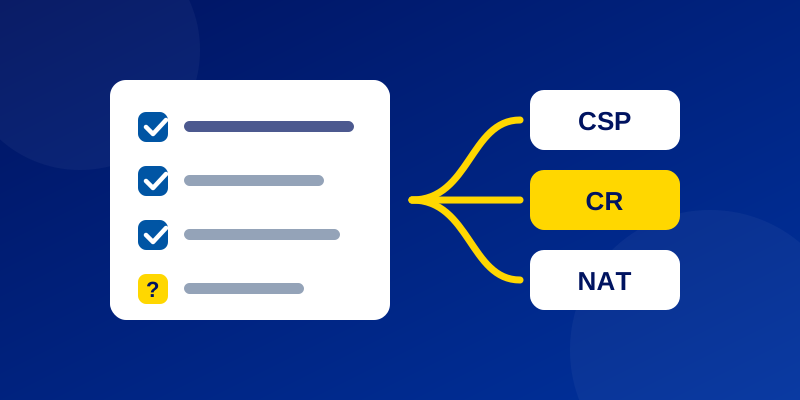
The civic exam exists in three categories, one for each application type: CSP (multi-year residence permit), CR (resident card), and NAT (naturalisation). The exam format is the same — 40 questions in 45 minutes, 32 correct answers required — but the scope of knowledge widens with the category: NAT, the most demanding, covers all CR and CSP questions. Preparing for the right category means you neither over-revise nor under-prepare. Browse our guides by application type: carte de séjour pluriannuelle, carte de résident and naturalisation.
Frequently asked questions
Does this test replace an official check?›
No. This test is an educational guidance tool: it indicates the likely category for your application or the possibility of an exemption, but only official texts and the administration have legal authority. Always verify your situation on service-public.fr.
Which applications require the civic exam?›
The first application for a multi-year residence permit (CSP category), the first application for a resident card (CR category), and naturalisation (NAT category). Renewal of an already-held permit is not, in principle, subject to the exam.
What should I do if I am affected?›
Identify your category (CSP, CR, or NAT), then practise using the corresponding series: the syllabus and difficulty level differ by category. Aim for at least 85% accuracy per topic before booking your session.
Does the test collect personal data?›
No. The test runs entirely in your browser: no answers are saved or transmitted, and no account is required.
This orientation test does not constitute legal advice. Eligibility and exemption conditions are set by official regulations, available on Légifrance and service-public.fr.